


Bibimbap is a vibrant and flavorful dish that brings together a medley of fresh vegetables, tender meat, and perfectly cooked rice, all topped with a sunny-side-up egg. The delightful mix of textures and the explosion of flavors make it a must-try for anyone who loves Korean cuisine. Each bite delivers a harmony of savory, spicy, and earthy notes that dance on your palate like they’re auditioning for a Broadway show.
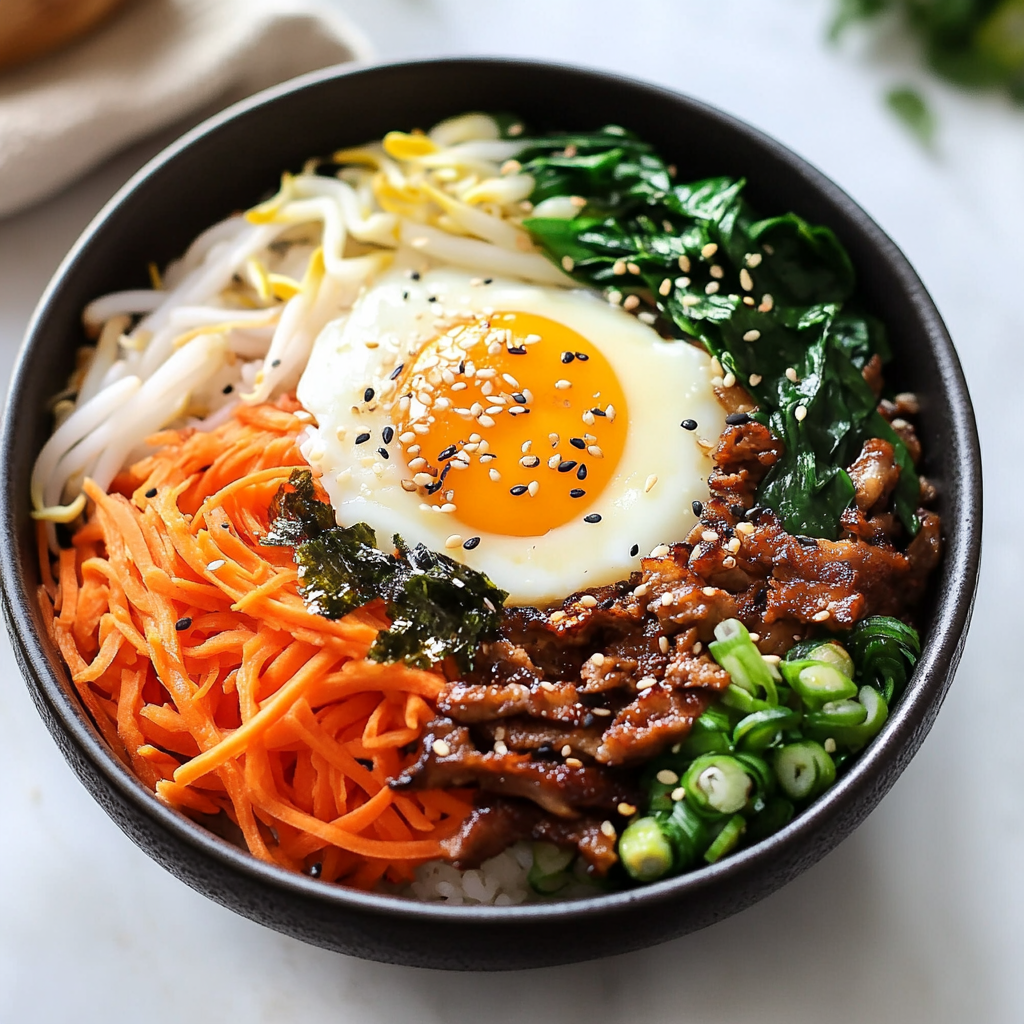
I still remember my first encounter with bibimbap at a cozy little Korean restaurant in my neighborhood. I was overwhelmed by the colorful presentation and mouthwatering aroma wafting from the kitchen. It felt like the dish was winking at me, saying, “Come on, try me!” Now, whenever I whip up this dish at home, I can’t help but relive that joyful moment. It’s perfect for family dinners, casual gatherings with friends, or even when you’re just craving something deliciously comforting.
Why You'll Love This Recipe
- Bibimbap is incredibly easy to prepare, making it ideal for weeknight meals or meal prep
- The flavor profile is utterly irresistible, combining spicy gochujang with fresh veggies and protein
- With its stunning visual appeal, this dish will impress anyone you serve it to
- Plus, it’s versatile; swap out ingredients based on what you have or prefer
Whenever I share my homemade bibimbap with friends or family, their delighted faces light up like Christmas morning; it’s always a hit.
Essential Ingredients
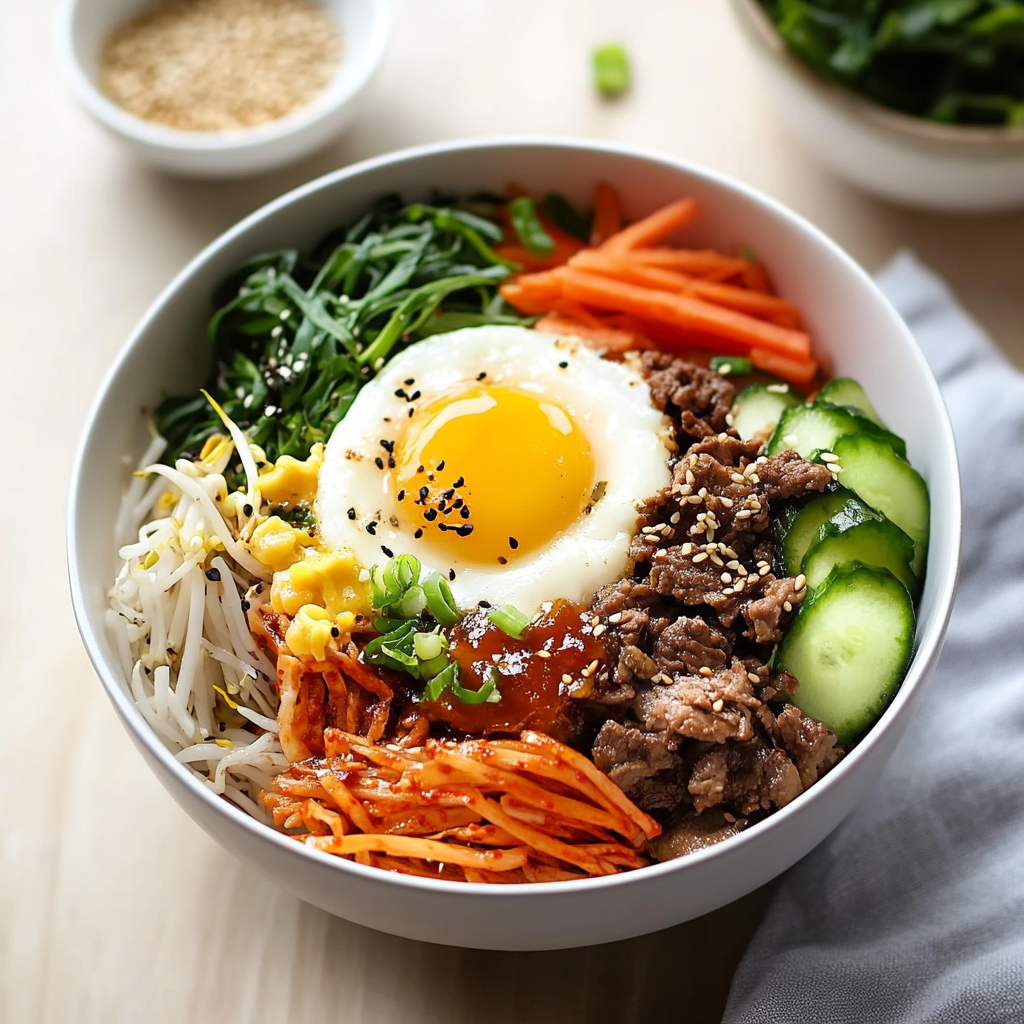
Here’s what you’ll need to make this delicious dish:
-
Cooked Rice: Use short-grain rice for the best texture; it sticks well and absorbs flavors beautifully.
-
Vegetables: A mix of carrots, spinach, mushrooms, and zucchini works wonders; feel free to add your favorites.
-
Protein: Choose beef bulgogi or tofu depending on your preference; both add great flavor.
-
Gochujang Sauce: This spicy red pepper paste is the star of the show; adjust the amount to suit your heat tolerance.
-
Sesame Oil: This adds a rich nutty flavor; use high-quality oil for the best taste.
-
Eggs: A fried egg on top ties everything together; aim for runny yolks for extra creaminess.
The full ingredients list, including measurements, is provided in the recipe card directly below.
Let’s Make it Together
Prep Your Ingredients: Start by washing and slicing all your vegetables into thin strips. Getting them prepped creates an organized cooking environment and sets you up for success.
Cook the Rice: Rinse 1 cup of short-grain rice under cold water until the water runs clear. Cook according to package instructions—usually about 20 minutes—until fluffy.
Sauté the Vegetables: In a skillet over medium heat, add a splash of sesame oil. Sauté each vegetable separately until tender but still vibrant—about 3-4 minutes each will do.
Prepare Your Protein: If using beef bulgogi, marinate thin slices in soy sauce and garlic while cooking vegetables. Sear in the same skillet until browned—around 5-7 minutes works well.
Cook the Egg: In another pan, lightly grease with oil over medium heat and fry an egg sunny-side up until edges are crispy yet yolk remains runny—approximately 3 minutes should do it.
Assemble Your Bowl: In a serving bowl, layer rice at the bottom, then arrange sautéed vegetables and protein artfully on top. Finish off with your fried egg and drizzle generously with gochujang sauce.
Enjoy every bite as you mix all those gorgeous layers together! It’s like creating your own masterpiece right before diving in.
Now you have everything you need to create this delicious bibimbap masterpiece at home! Enjoy your culinary adventure!
You Must Know
- Bibimbap is more than a meal; it’s a colorful, delicious experience
- Layering flavors and textures creates a delightful harmony that will impress any guest
- The sizzling sound when serving it hot adds to the excitement of this vibrant dish
Perfecting the Cooking Process
Start by preparing your vegetables first; then cook your protein while the rice steams. This sequence ensures everything is fresh and ready to serve simultaneously.
Add Your Touch
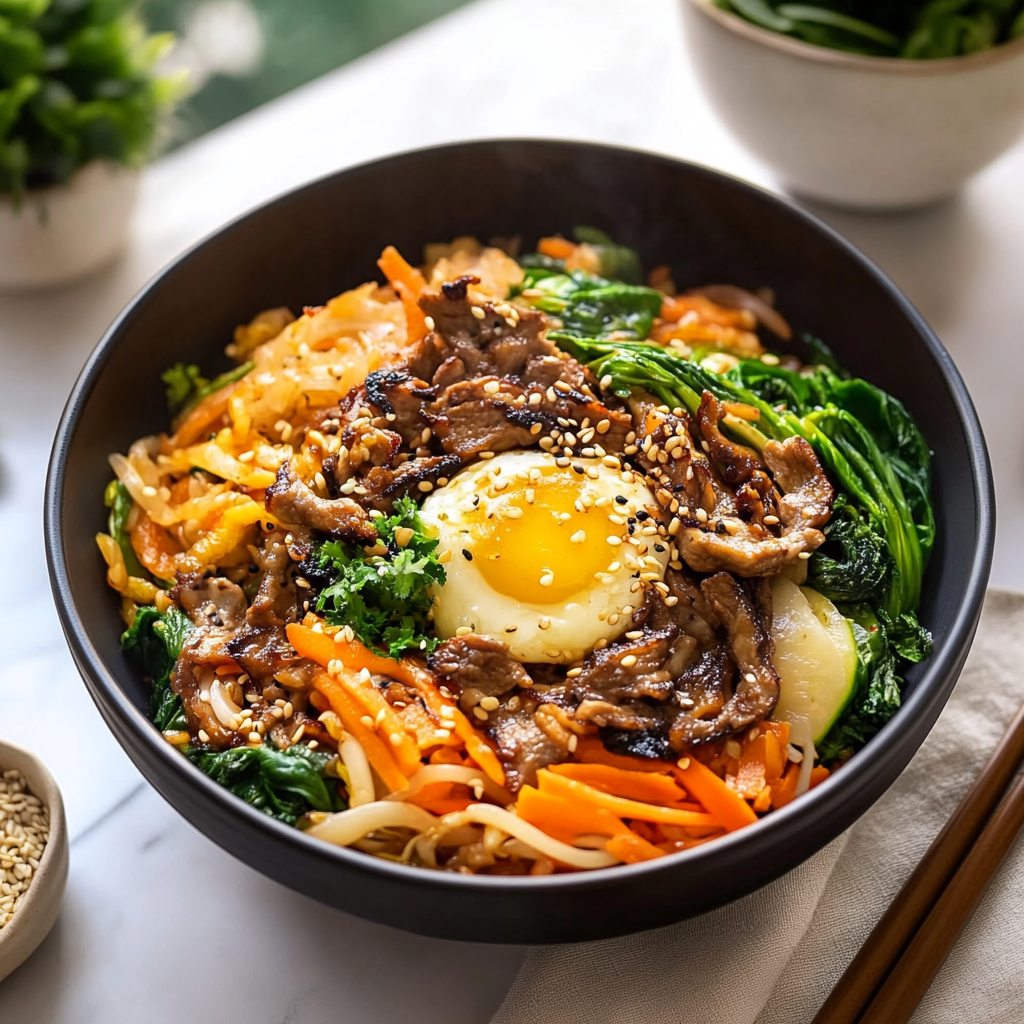
Feel free to swap out vegetables based on the season or your preferences. You can also try different proteins like tofu for a vegetarian twist.
Storing & Reheating
Store leftovers in an airtight container in the fridge for up to three days. Reheat gently on the stovetop to maintain texture and flavor.
Chef's Helpful Tips
- For the best bibimbap experience, focus on fresh ingredients and proper seasoning
- Don’t overcrowd your pan when cooking vegetables; they need space to caramelize properly
- Always serve it hot with a fried egg on top for that extra yum factor!
Sharing my first bibimbap experience reminds me of that time I cooked for my friends. They were blown away by how good it tasted, and I felt like a kitchen rock star!
FAQ
What is bibimbap?
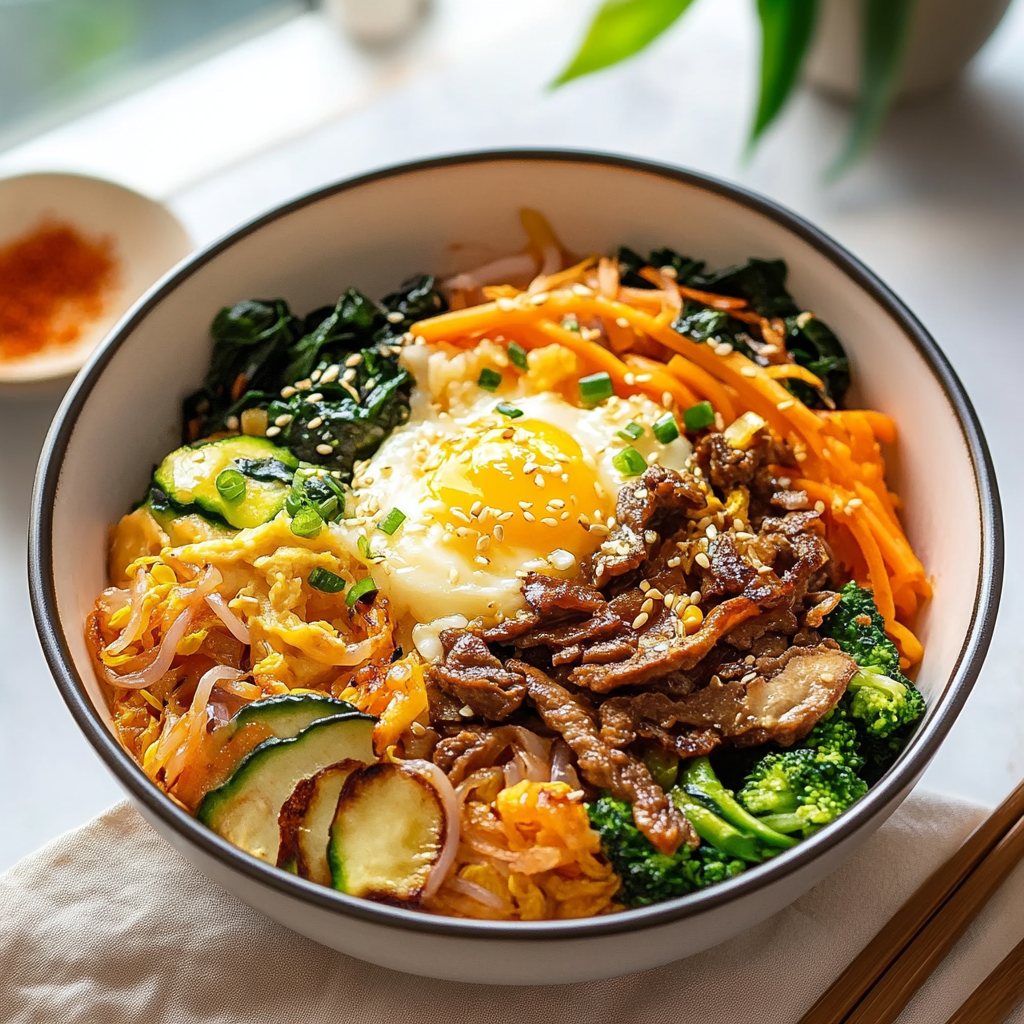
Bibimbap is a traditional Korean dish featuring rice topped with assorted vegetables, meat, and egg.
Can I make bibimbap vegetarian?
Absolutely! Just skip the meat and use tofu or additional veggies instead.
How do I serve bibimbap?
Serve it hot in a bowl, topped with a fried egg and gochujang sauce for extra flavor.
Bibimbap

Bibimbap is a classic Korean dish that offers a delightful blend of flavors and textures, featuring a vibrant mix of sautéed vegetables, protein, and rice, all crowned with a sunny-side-up egg. This dish is not only visually appealing but also incredibly versatile—perfect for any occasion! Whether you’re hosting friends or enjoying a cozy family meal, bibimbap promises to satisfy your cravings with its harmonious balance of savory, spicy, and earthy notes.
- Prep Time: 15 minutes
- Cook Time: 25 minutes
- Total Time: 40 minutes
- Yield: Serves 2
- Category: Main
- Method: Sautéing/Frying
- Cuisine: Korean
Ingredients
- 1 cup short-grain rice
- 1 medium carrot, julienned
- 1 cup spinach
- 1 cup mushrooms, sliced
- 1 medium zucchini, julienned
- ½ lb beef bulgogi (or tofu for vegetarian option)
- 3 tbsp gochujang sauce
- 1 tbsp sesame oil
- 2 eggs
Instructions
- Rinse rice under cold water until clear, then cook according to package instructions (about 20 minutes) until fluffy.
- Prep vegetables by washing and slicing them into thin strips.
- In a skillet over medium heat, add sesame oil and sauté each vegetable separately for about 3-4 minutes until tender.
- If using beef bulgogi, marinate slices in soy sauce and garlic while cooking veggies. Sear in the same skillet for about 5-7 minutes until browned.
- In another pan, fry eggs sunny-side-up until edges are crispy and yolks are runny (about 3 minutes).
- Assemble: Layer rice in a bowl, top with sautéed vegetables and protein. Finish with the fried egg and drizzle with gochujang sauce.
Nutrition
- Serving Size: 1 bowl (approximately 400g)
- Calories: 550
- Sugar: 5g
- Sodium: 800mg
- Fat: 22g
- Saturated Fat: 3g
- Unsaturated Fat: 15g
- Trans Fat: 0g
- Carbohydrates: 70g
- Fiber: 4g
- Protein: 20g
- Cholesterol: 186mg